Cane furniture is back, and this time, it’s not just a nostalgia trip. After years of cold, minimalist interiors dominating design feeds, homeowners and designers alike are craving warmth, texture, and pieces that feel handmade rather than mass-produced. Enter cane: the woven rattan material that graced Victorian parlors and mid-century living rooms is once again having a moment, this time reimagined for modern spaces. In fact, a recent 1stDibs designer survey found that more than a quarter of design experts named rattan and wicker as key trends heading into this year, proof that cane’s appeal is anything but fleeting. Whether you’re drawn to its airy, natural look or its sustainable roots, here’s everything you need to know about why cane furniture is having its biggest comeback yet.
What Is Cane Furniture, Exactly?

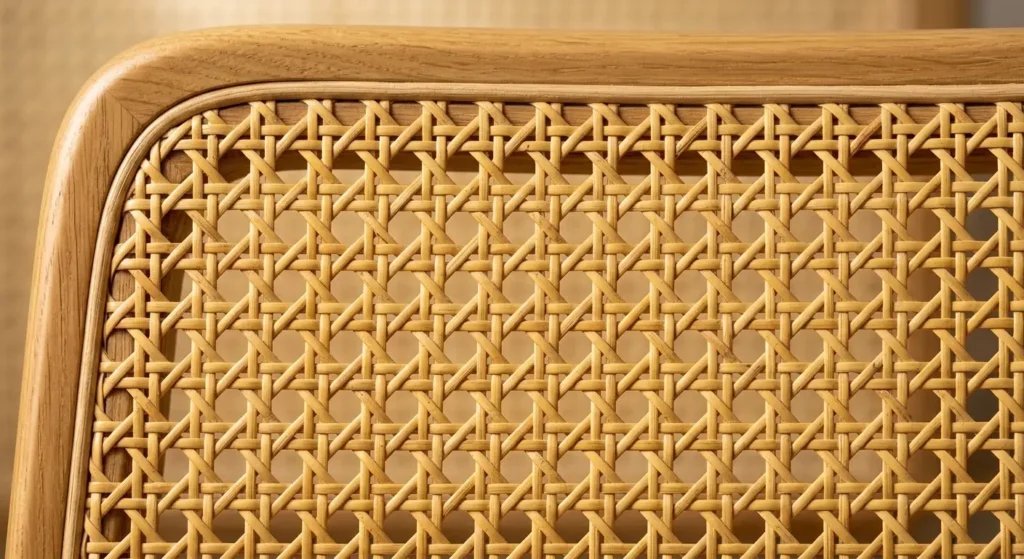
Cane is the thin, glossy outer skin of the rattan plant, a climbing palm found in Southeast Asia’s forests. When rattan stems are harvested, they’re split into two parts: the solid inner core, which becomes furniture frames, and the outer skin, which is peeled into strips and woven into cane.
Most people confuse cane with rattan and wicker, but they’re not the same thing. Rattan is the raw plant material, thick and sturdy, mostly used for frames. Cane is a byproduct of rattan, thinner and more flexible, used for the woven parts like seats and backrests. Wicker isn’t a material at all, it’s a weaving technique, so a wicker piece could be made from cane, rattan, bamboo, or even synthetic fiber.
Bamboo is often lumped in too, but it’s a completely different plant, a hollow grass rather than a vine, and it doesn’t behave the same way when woven.
So when you buy a cane chair, you’re usually getting a wooden or rattan frame with a woven cane seat or backrest, sometimes both. That’s the whole idea behind cane furniture, a sturdy base paired with a light, breathable woven surface that’s been made the same way for centuries.
A Short History of Cane Furniture
Cane furniture’s story starts in the 17th century, when trade routes brought furniture from India and Southeast Asia into Britain and the rest of Europe. According to Britannica, cane was already being used in India as early as the 2nd century AD, and it was imported into Europe by the East India Company, becoming fashionable in England and the Netherlands toward the end of the 1600s. British craftsmen were struck by the lightness and detail of these woven pieces and began adapting the technique for their own chairs, using cane instead of heavier upholstery. It caught on quickly because it solved a real problem: cane was cooler to sit on, easier to clean, and far lighter to move than the padded, heavy furniture common at the time.
By the Victorian era, cane had become a fixture in British homes, appearing in everything from parlor chairs to nursery furniture. Its popularity continued into the early 20th century, especially in conservatories and sunrooms, where its breathability made it a natural fit. Then came the mid-century modern movement, which gave cane a fresh identity. Designers paired it with clean wooden frames and minimal silhouettes, moving it away from ornate Victorian styling and into something sleeker and more functional. This is the era that produced a lot of the cane furniture people now associate with vintage design.
The 1970s pushed cane even further into the mainstream through the boho and coastal design movements, where its natural, earthy look fit perfectly with the decade’s love of texture and organic materials. After that, cane’s popularity cooled off for a while as design trends shifted toward sleeker, more industrial materials. But it never fully disappeared, and that’s the part of its history that matters most right now. Cane has resurfaced again and again over the decades, not because of forced nostalgia, but because the material genuinely works with whatever era it lands in. That’s exactly what’s happening again today.
Why Cane Is Trending Again in 2026

Interior design has moved away from the cold, sterile minimalism that dominated the last several years, and cane fits perfectly into what’s replacing it. Homes are being styled around warmth, texture, and natural materials now, the kind of look that feels lived-in rather than showroom-perfect. Cane’s woven texture and honey-toned finish do exactly that. It softens a room without cluttering it, which is why designers keep reaching for it again.
Another reason cane is back is the blending of indoor and outdoor spaces. People want their living rooms to feel connected to their patios, gardens, or sunrooms, and cane naturally bridges that gap. It looks just as at home in a conservatory as it does in a formal living room, so it works as a common thread running through a whole house rather than being confined to one style of room.
Sustainability plays a big role too. Cane is a natural, renewable material that doesn’t rely on heavy processing or synthetic inputs, and buyers are increasingly paying attention to what their furniture is actually made of. In a market full of mass-produced, short-lifespan furniture, cane pieces feel like something worth keeping for years, not something that gets replaced every couple of seasons.
What’s different about this comeback compared to previous ones is how it’s being styled. Designers aren’t just recreating old-school boho or coastal looks anymore. Cane is now paired with bold upholstery, statement lighting, and clean modern cabinetry, which pulls it out of a single aesthetic and makes it work in contemporary, eclectic, and even minimalist interiors. That flexibility is likely why this particular wave of popularity feels less like a trend cycle and more like cane finding a permanent place in modern furniture again.
Types of Cane Furniture to Know
Cane furniture isn’t limited to the classic bistro chair most people picture when they hear the word. It’s used across nearly every category of furniture today, and each type brings out a different side of the material.
Chairs

Chairs are still where cane shows up most often, and for good reason. Accent chairs with woven cane backs are a common way to add texture to a living room without committing to a full cane sofa. Dining chairs are another popular choice, especially paired with wooden or metal frames, since the open weave keeps a dining set from feeling too heavy visually. Bistro-style cane chairs, with their light, curved frames, have also made a strong comeback, often used as extra seating or in casual dining nooks.
Beds and Headboards
Beds and headboards are one of the biggest growth areas for cane right now. A cane headboard adds a soft, natural focal point to a bedroom without the bulk of upholstery, and it works well in both minimalist and more layered, eclectic bedrooms. Designers often point to this as one of the reasons cane feels fresh again, since it wasn’t a category people associated with cane a decade ago.
Storage Furniture

Storage furniture is another space where cane has found new life. Cabinets, sideboards, and wardrobes with cane-fronted doors bring texture to what would otherwise be a plain, flat surface, and they work particularly well in kitchens and living rooms where an all-wood or all-metal piece might feel too heavy. The woven front also has a practical benefit, since it allows a bit of airflow, which matters for linen or pantry storage.
Tables
Tables round out the core categories, usually appearing as side tables or coffee tables with cane detailing on the base or shelving rather than the tabletop itself, since cane isn’t typically built to handle a hard, flat surface on its own.
Lighting and Mirrors
Beyond furniture, cane is also creeping into lighting and mirrors, two areas where it wasn’t traditionally used much. Pendant lights and lampshades with a woven cane exterior are becoming a popular way to bring the material into a room without adding a full piece of furniture, and cane-framed mirrors are following the same idea. This expansion into smaller, decorative pieces is part of why cane feels less like a single furniture style now and more like a material that can touch almost every part of a home.
Styling Cane Furniture in a Modern Home

Cane has a reputation for being tricky to style, mostly because people associate it with one specific look, boho or coastal, and assume that’s the only way it works. In reality, cane is one of the more flexible materials you can bring into a home, and part of what makes it work so well is physical, not just aesthetic. The open weave lets light pass through instead of blocking it, so a cane chair or headboard actually changes how a room feels lit, throwing soft shadows across a wall or floor as the day moves. Interior designer Bilal Rehman put it simply when he told Hunker that people now want their homes to feel layered and personal rather than overly polished, which is exactly the gap cane fills.
Pairing With Contrasting Textures
Cane looks best when it’s not surrounded by more of the same softness. A cane-backed dining chair against a dark walnut table, or a woven cane cabinet front next to matte black hardware, creates contrast that makes the weave stand out instead of blending into a sea of natural materials. Designer Peggy Haddad describes using a round rattan side table alongside a pair of scalloped rattan lamps to build texture and character into a living room, proof that even within a single material family, mixing shapes and finishes keeps the look from feeling flat. This is also the trick that pulls cane out of a purely boho look and into something more modern, one or two woven pieces set against structured, solid furniture reads as intentional rather than themed.
Working With Small and Large Spaces
In smaller rooms, cane’s biggest advantage is that it doesn’t visually weigh a space down the way solid wood or heavily upholstered furniture can. An open-weave cane chair or a cane-fronted cabinet takes up physical space without making a room feel cramped, since light passes through the weave instead of being blocked by it. In larger, open-plan rooms, cane is increasingly being used at a bigger scale altogether, oversized cane lounge chairs, curved sectionals, and tall woven headboards that give a room presence rather than sitting quietly as an accent. The material’s flexibility is what makes both scales work.
Choosing a Complementary Color Palette
Cane’s natural tone sits somewhere between honey and light brown, and it pairs well with warm neutrals, terracotta, olive green, and deep smoky tones. A cane headboard against a terracotta accent wall, or a cane armchair with an olive-toned cushion, lets the weave stay the visual focus of the room instead of competing with a busy background. Darker, hand-finished cane weaves, in charcoal or smoky brown, are also becoming more common for people who want the texture of cane without its traditional light, breezy look, giving it a more grown-up, less beach-house feel.
Mixing Vintage and Contemporary Pieces
One of the easiest ways to style cane in a modern home is to combine an older, vintage cane piece with newer furniture. A vintage cane armchair next to a clean-lined modern sofa, or an antique cane headboard in an otherwise minimal bedroom, creates the layered, collected-over-time look that a lot of current interior design is chasing. It also means you don’t need an entire room full of cane furniture to get the effect. Often, just one well-placed vintage or statement piece does more for a room than filling it with matching woven furniture ever could.
Buying Guide: What to Look For
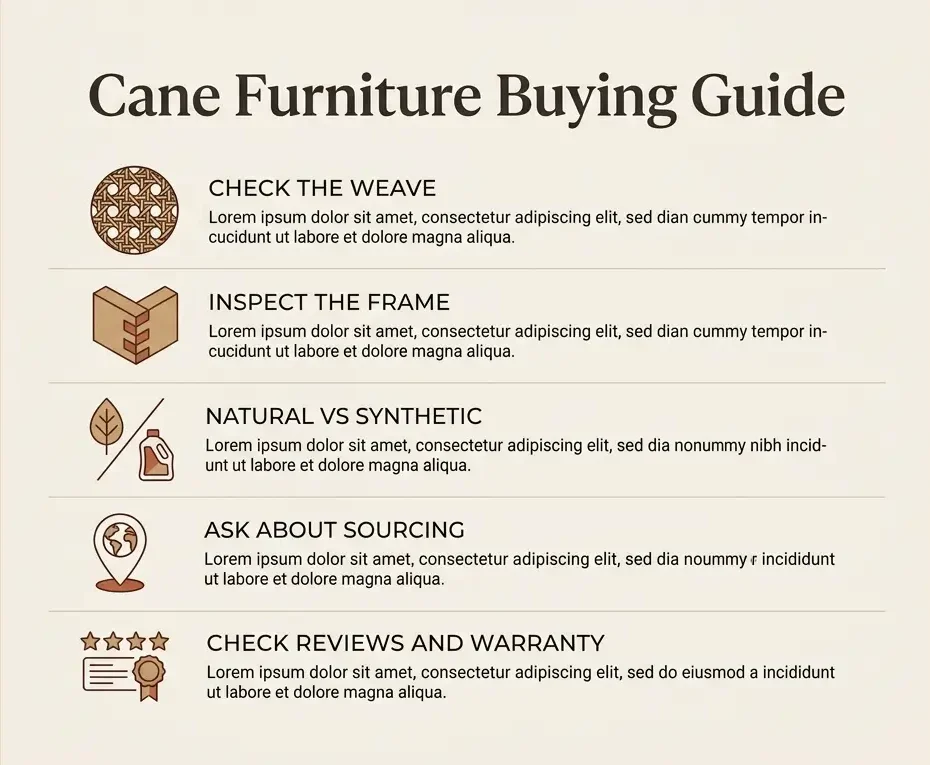
Cane furniture can range from beautifully durable to flimsy and short-lived, and the tricky part is that a lot of it looks nearly identical in photos. Knowing what separates a well-made piece from a cheap one before you buy will save you from an expensive mistake, especially since cane is one of those materials where price and quality don’t always move together the way you’d expect.
Open Cane vs. Closed Cane
Before anything else, it’s worth checking which construction method a piece actually uses, since this affects both price and durability. Open, hand-caned weave, where individual strands are threaded through drilled holes in a visible honeycomb pattern, takes far longer to produce and is generally the more durable, higher-end option. Closed or pressed cane, where a pre-woven sheet is machine-fitted into a groove, is faster and cheaper to manufacture, which is why it shows up more often on budget furniture. Neither is inherently bad, pressed cane can still hold up fine for light use, but you should know which one you’re paying for. Listings rarely spell this out directly, so look closely at the weave pattern in photos: hand-caning usually shows slight, natural irregularities, while pressed cane looks almost too uniform.
Checking the Weave and Frame
Look closely at the weave itself. A quality piece has a tight, even pattern with no visible gaps, loose strands, or fraying at the edges. Run your hand across it if you can, it should feel smooth, not rough or splintery. The frame underneath matters just as much as the weave. If it’s rattan, look for continuous poles with subtle natural growth nodes running along them, almost like faint rings. A frame that’s perfectly smooth and uniform all the way through is usually a sign it’s synthetic or a different material dressed up to look like the real thing.
Weight is a useful, if imperfect, indicator too. Cane furniture should feel light in your hands, but the frame itself shouldn’t flex or creak under gentle pressure. If a chair wobbles or the joints give slightly when you press on them, that’s a sign of undersized poles or rushed construction, not just a “delicate” design choice.
Inspecting the Joints
Wherever poles or frame pieces meet, there should be tight, even binding holding them together. Loose wraps, visible glue, or joints that look slapped together rather than woven are shortcuts manufacturers take to cut costs, and they’re usually the first thing to fail once the piece is in regular use.
Natural Cane vs. Synthetic Alternatives
Not everything labeled “cane” or “rattan” today is the real, natural material. Synthetic versions made from resin or polyethylene are common, especially for outdoor furniture, since they resist rain and sun far better than natural cane ever could. There’s nothing wrong with synthetic cane if you know that’s what you’re buying and want it specifically for a patio or garden. The problem is when it’s sold ambiguously as though it’s natural. Always check the listing or ask the seller directly, and be wary of anything that avoids the question.
Where the rattan was sourced is worth a glance too. Indonesia and the Philippines are major, well-established sources for quality rattan, and brands that mention sourcing transparently are usually more serious about material quality overall. It’s not a hard rule, but a brand that can’t or won’t say where its cane comes from is often cutting corners elsewhere as well.
What You Should Actually Expect to Pay
Prices vary a lot depending on construction, but as a rough guide: mass-produced, closed-cane pieces from high street retailers tend to sit at the lower end, since machine production keeps costs down. Hand-caned, open-weave furniture from specialist or heritage makers costs noticeably more, often two to three times as much for a comparable chair, because of the labor involved. Vintage pieces can fall anywhere in between, sometimes cheaper than new hand-caned furniture, sometimes more, depending on condition and maker. If you see a piece advertised as “solid rattan, hand-woven” at a price that looks closer to mass-market furniture, that’s usually a sign the description doesn’t match what you’re actually getting.
Red Flags When Buying Online
Since most cane furniture shopping now happens online rather than in a showroom, a few warning signs are worth watching for specifically. Listings with only wide, staged photos and no close-up shots of the weave or joints are hiding something more often than not. Vague material descriptions, like “rattan-style” or “woven finish” instead of a clear statement of what the piece is actually made from, are another red flag. No return policy or a seller with few or no reviews should also make you pause, since cane furniture issues (loose weave, creaking joints) often only show up after a few weeks of real use, not on arrival.
Reading Reviews and Warranties
Because cane furniture quality is so inconsistent across brands, reviews matter more here than with most furniture categories. Look specifically for comments about how a piece has held up after months or years of use, not just how it looked on arrival. A warranty is also a good signal, brands confident enough to stand behind their weaving and joinery for an extended period are usually the ones actually using better materials in the first place.
Caring for Cane Furniture
Cane is a natural material, and unlike wood or metal, it stays alive to its environment in a way most furniture doesn’t. It reacts to humidity, sunlight, and moisture, and understanding those reactions is really the whole secret to keeping a piece looking good for decades instead of a few years.
Getting the Humidity Right
Cane needs a certain amount of moisture in the air to stay flexible. Too dry, and the fibers become brittle, cracking or snapping under normal use. Too humid, and you risk mold, mildew, or the weave swelling and losing its shape. The sweet spot most experts point to is somewhere between 40 and 50 percent indoor humidity. If your home runs dry in winter, especially with central heating on, a room humidifier near your cane furniture makes a real difference. In damp climates or seasons, the opposite applies, a dehumidifier or simply better airflow in the room helps prevent moisture buildup in the weave.
Keeping It Away From Heat and Direct Sun
Cane furniture should be kept away from radiators, heating vents, and direct, prolonged sunlight. Heat pulls moisture out of the fibers fast, which is exactly the dryness and brittleness you’re trying to avoid. If a piece has to sit near a window that gets strong sun for most of the day, rotating it occasionally or using a curtain to filter the light can slow down fading and drying.
Regular Cleaning
A weekly wipe with a soft, dry cloth or a quick pass with a vacuum’s brush attachment is usually enough to stop dust from settling into the weave, where it’s much harder to remove once it builds up. For deeper cleaning, mix a small amount of mild soap into warm water and go over the piece gently with a soft cloth or soft-bristled brush, never anything abrasive, and never a harsh all-purpose cleaner, since those often contain oils or chemicals that settle into the weave and damage the fibers over time.
The one rule to be careful about is water. Cane absorbs moisture and expands when it gets wet, so after cleaning, it needs to dry completely, sometimes up to a full day, before anyone sits on it again. If it’s used while still damp, the seat can stretch permanently and start to sag.
Dealing With Mold or Mildew
If you spot mold or mildew, usually from a piece being kept somewhere too humid or damp, a diluted solution of either bleach or hydrogen peroxide in warm, soapy water can treat it (never mix the two together). Apply it, rinse thoroughly, and let the piece dry outdoors on a warm, breezy day if possible, since trapped moisture is what caused the problem in the first place.
Feeding the Cane
Every six months to a year, especially for natural, unfinished cane, a light application of furniture oil, lemon oil, orange oil, or mineral oil all work, helps keep the fibers supple rather than letting them dry out over time. Apply it sparingly to the top of the woven surface, and avoid coating the underside, since cane needs to breathe and flex naturally as humidity shifts through the seasons.
Treated this way, cane furniture isn’t actually high-maintenance, it just asks for a bit more attention to its environment than furniture made from less reactive materials. In exchange, a well cared for piece can genuinely last for decades, which is part of why it keeps showing up as a “forever furniture” choice rather than something people replace every few years.
Sustainability & Ethical Sourcing
A big part of cane’s comeback isn’t just about how it looks, it’s about what it’s made of and how it’s made. In a furniture market full of synthetic materials and short-lifespan pieces, cane has a genuinely strong sustainability story, renewable, biodegradable, low-impact to process. But that story only holds up when the sourcing behind it is actually responsible, and that part is a lot less consistent across the industry than most brand websites let on.
Why Cane Is Considered an Eco-Friendly Material
Rattan, the plant cane comes from, grows fast. Some species reach maturity in just five to seven years, and harvesting only removes mature stems while leaving the palm itself to keep growing, which means it can be harvested repeatedly without wiping out the plant. Processing cane also requires relatively little energy or chemical input compared to synthetic alternatives or heavily treated timber, and at the end of its life, natural cane is fully biodegradable. A cane chair that’s reached the end of its usable life breaks down naturally, unlike synthetic rattan or plastic furniture, which lingers in landfill for decades after it’s fallen apart.
There’s an indirect benefit too. In regions where rattan grows wild, harvesting it responsibly gives local communities an economic reason to protect the surrounding forest rather than clear it, since a healthy, standing forest is what keeps the rattan supply going long-term.
Where the Story Gets Complicated
None of this means every piece of cane furniture on the market is automatically sustainable, and it’s worth being honest about that. Wild rattan in parts of Southeast Asia has faced real overharvesting pressure as global demand has grown, and unlike farmed timber, a lot of rattan still comes from natural forest stands rather than managed plantations, which makes it harder to guarantee it was harvested at a sustainable rate. Labor conditions vary just as much. Much of the world’s cane is still handwoven by artisans in small workshops, which is part of what makes it beautiful, but it also means fair pay and safe working conditions depend entirely on how accountable a specific manufacturer chooses to be. There’s no single global standard that guarantees either of these things, which is exactly why sourcing transparency matters so much when you’re actually buying.
Where Cane Actually Comes From
Most of the world’s commercial rattan comes from Indonesia, which supplies an estimated 70 to 80 percent of global production, along with the Philippines, Vietnam, and parts of India. Some smaller, artisan-focused brands source directly from a single region and name it openly, for example, a maker sourcing rattan from Northeast India and working with a small group of local artisans, rather than buying from an anonymous mixed supply chain. That kind of direct, traceable relationship is generally a stronger signal of ethical sourcing than a certification badge alone, since it means the brand actually knows where its material and its labor come from, not just that it passed an audit somewhere upstream.
What to Actually Look For When Buying
This connects directly back to the buying guide: when you’re checking a listing for vague material descriptions or asking a seller about their weave, it’s worth asking the same directness about sourcing. A brand that can tell you which region its rattan comes from and something about who wove it is a far better sign than one that goes quiet when asked. Certifications help too, FSC (Forest Stewardship Council) verifies the rattan wasn’t harvested at the forest’s expense, and BSCI (Business Social Compliance Initiative) verifies fair wages and safe conditions across the supply chain, but treat them as one data point alongside transparency, not a replacement for it.
The Bigger Picture
The most sustainable piece of furniture, in any material, is usually the one that lasts the longest. A well-made, responsibly sourced cane piece can last decades and be re-caned rather than thrown out whole when the weave eventually wears down, which is where cane’s durability and its environmental case actually meet. Cheap synthetic alternatives might look sustainable-adjacent on the surface, but they degrade faster and skip the natural breakdown real cane offers at the end of its life. Choosing cane furniture is a genuinely lower-impact decision, but only when it’s chosen carefully. The material does the easy part. The sourcing is where the real work is.
Conclusion
Cane furniture’s comeback isn’t really a comeback at all, it’s just the latest chapter in a material that’s been quietly proving itself for centuries. From its earliest arrival in 17th-century Europe to its place in mid-century modern homes to the way it’s being reimagined today, cane keeps returning because it actually works, not because trends demand it. It’s light without being flimsy, textured without being loud, and flexible enough to sit comfortably in a minimalist space or a maximalist one without ever looking out of place.
If you’re thinking about bringing cane into your own home, the most important thing isn’t the style you choose, it’s the piece itself. Look closely at the weave and the frame, ask about where it was sourced, and take the time to care for it properly once it’s yours. Do that, and a cane piece won’t just be a passing trend in your home. It’ll be something you’re still using, and still liking, decades from now.